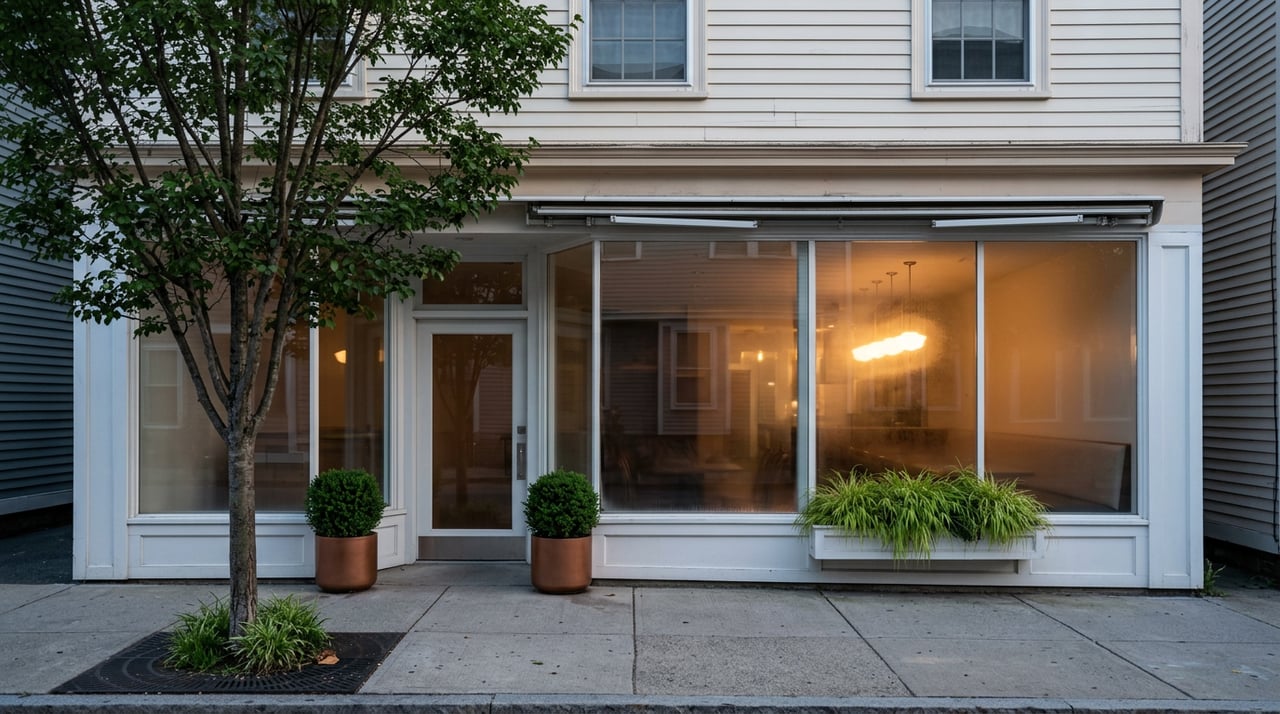
Ten Tables closed for good on New Year's Eve, after more than twenty years serving locally sourced New American food at 597 Centre Street. That spring, a business called Beyond Proof opened in the exact same room, with the exact same owner behind the bar. The walls are still there. The floor plan didn't move. What changed is that nobody in the building is drinking.
That single fact tells you more about Jamaica Plain this fall than a list of openings ever could. Nearly everything new happening in the neighborhood right now, from the restaurant scene to the festival calendar, is running on infrastructure that already existed. Nobody built a venue. They reused one they already had, usually the same one, usually run by the same people. If you're trying to understand what's actually different about JP this September, that's the thread. Not new addresses. Old ones, doing something else.
The Same Room, a Different Kind of Night
Krista Kranyak ran Ten Tables in that Centre Street space for more than twenty years, the kind of neighborhood bistro where you'd run into someone you knew at the bar most nights. When she closed it, she told people she was done. She'd moved into commercial real estate and had a deal lined up to sell the space outright. Then the deal fell through, and she found herself back in the building she thought she'd left.
What she opened instead is Boston's only zero-proof bar. Beyond Proof serves a full menu of thirteen cocktails, all alcohol-free, alongside Mediterranean mezze: hummus boards, beef kofta, roasted carrots with labneh and pistachios. Kranyak repainted the old gray walls a warm rose and hung a floral mural over the banquettes, but the bones of the space are unmistakably Ten Tables. She even brought back Randy Martinez and Cristy Portillo De Martinez, cooks she first worked with at a second Ten Tables location she used to run in Cambridge.
The bar seats forty people in about 800 square feet, and for now it's just Kranyak and one bartender running the whole floor, waiting tables herself for the first time in twenty years. She's been sober for three years, and she built the cocktail list to be taken as seriously as any bar's, torching wood chips tableside for a smoked old fashioned made with zero-proof bourbon. In one write-up, she described what she was actually after:
"And that to me feels like a real restaurant. A real community space of breaking bread together."
That's not a pivot away from what the space used to be. It's the same idea, with the alcohol subtracted. She's even said that if Massachusetts opens up social consumption licensing for regulated cannabis, she'd add THC tinctures to the drink list rather than reach for a liquor license. The building stays the building. The night just changes shape.
A Bigger Version of the Same Small Idea
A few blocks away, a different version of the same pattern is forming. Moe Kuroki used to run Oisa Ramen Slurp & Go, a nine-seat spot that closed in 2020. She never actually stopped cooking. She's spent the years since doing pop-ups and working at Koji Club, Iru, and Juliet, building a private chef business on the side, and now she's working on a new restaurant called Hinata Shokudo, which roughly translates to "sun-filled eatery."
The new place would seat about seventeen people, nearly double Oisa's old dining room, but that's still a small restaurant by any measure. Kuroki has no investor and no partner. She's doing the buildout herself, one hurdle at a time, drawing the menu from the meals her mother cooked for her growing up and the ones she now makes for her own daughters. She's considering weekly tasting menus, cooking classes, and Sunday brunch, and she plans to apply for a beer and wine license mainly so she can pour sake. If everything clears in time, she hopes to open before the end of the year, though the exact address hasn't been announced yet.
Put next to Beyond Proof, the pattern gets clearer. Two chefs who already had a following in this neighborhood, both choosing to scale their old, small idea up slightly rather than start over with something bigger and more generic. Neither is importing a concept from outside JP. Both are just resizing what they already knew how to do here.
The House That Never Left
If you want to see this same instinct on a longer timeline, walk over to the Loring-Greenough House at 12 South Street. It's the oldest house in Jamaica Plain still standing in its original form, built in 1760 for Commodore Joshua Loring, a Loyalist naval officer who fled the property with his family in 1774 as the Revolution turned against him. The house served briefly as a military headquarters and hospital, then passed through the Greenough family for more than a century.
In 1924, the Jamaica Plain Tuesday Club bought the house for $16,000 to keep it from being torn down, and the club has run it as a community space ever since, more than a century of the same organization stewarding the same building. Today it hosts Thursdays on the Lawn, with music, games, and a food truck, plus a monthly poetry reading called Chapter & Verse and Sunday concerts in the drawing room.
It's also the starting point for the Jamaica Plain Historical Society's free walking tours, now in their 31st season. Every Saturday at 11am, a volunteer guide leaves from a different spot around the neighborhood. The Monument Square tour passes a house dating to 1716 that once served as a tavern, the Eliot School from 1689, and the home of the first woman to graduate from MIT. The Sumner Hill tour covers a National Historic District built out of nineteenth-century summer estates, including the ancestral home of the Dole Pineapple Company founder. The Jamaica Pond tour traces how a stretch of shoreline once used for private estates and commercial ice harvesting became the park most of the neighborhood now walks past daily. The Stony Brook tour covers the old tannery and brewery buildings that eventually became the Boston Beer Company's Sam Adams brewery, and the 1970s fight that kept the Southwest Expressway from cutting through the neighborhood entirely.
None of this is new information being packaged for tourists. It's the same guides, the same free tours, walking the same streets they've walked for three decades, because the history underneath JP hasn't needed replacing.
One Weekend, Then Another
The pattern holds for the neighborhood's biggest gatherings too, and this fall stacks three of them close together:
- JP Porchfest, Saturday, August 22, starting at noon. Now in its twelfth year, it turns actual front porches, plus a few green spaces and community hubs, into performance venues for a single day. It's produced by Dunamis, a nonprofit built around supporting Boston's next generation of artists and arts managers of color.
- The JP Music Festival, Saturday, September 12, at Pinebank Field on the northeast corner of Jamaica Pond. Running since 2011 and back for a 14th year, it's free, all-volunteer, and built almost entirely around musicians who live and work in the neighborhood. Expect two stages, more than 20 acts across seven hours, and food trucks that have become as much a fixture as the bands, including Bon Me, Daddy's Bonetown Burgers, and Mela's Modern Indian Cuisine.
- JP Open Studios, gearing up in early September and now in its fourth decade. Local artists open their own working studios, private space by definition, to the public for a weekend, with a materials and networking event happening September 2 at the Footlight Club on Eliot Street.
No stage gets built for any of this. No venue gets rented from outside the neighborhood. A porch is a porch until someone decides it's a stage for the day. A working studio is a studio until an artist opens the door and lets the block in.
What Actually Changed
None of this means Jamaica Plain is standing still. A beloved restaurant closed and something genuinely different opened in its place. A chef who'd been quiet for years is building something new from scratch. What's consistent is where all of it is happening. The same owner reopened the same room. The same volunteer network runs the same festival on the same field. The same nonprofit steward has kept the same 1760 house going for over a hundred years. Jamaica Plain doesn't seem to need new infrastructure to feel like something's happening. It just needs its existing infrastructure to keep changing hands, or changing purpose, inside the same walls.
If you've lived here a while, none of this will come as much of a shock. It's the reason people who move to JP tend to stay, and the reason people who leave tend to come back to visit more than they visit anywhere else. The neighborhood doesn't ask you to catch up on something new every season. It asks you to notice what the old things are doing now.
If you're a longtime JP resident thinking about what a move within the neighborhood might look like, or wondering what your own home could be worth in a market that keeps reusing itself this well, Juan Real Estate Group has spent years watching these blocks change hands and purpose right along with them. Let's connect: book a free valuation or consultation.