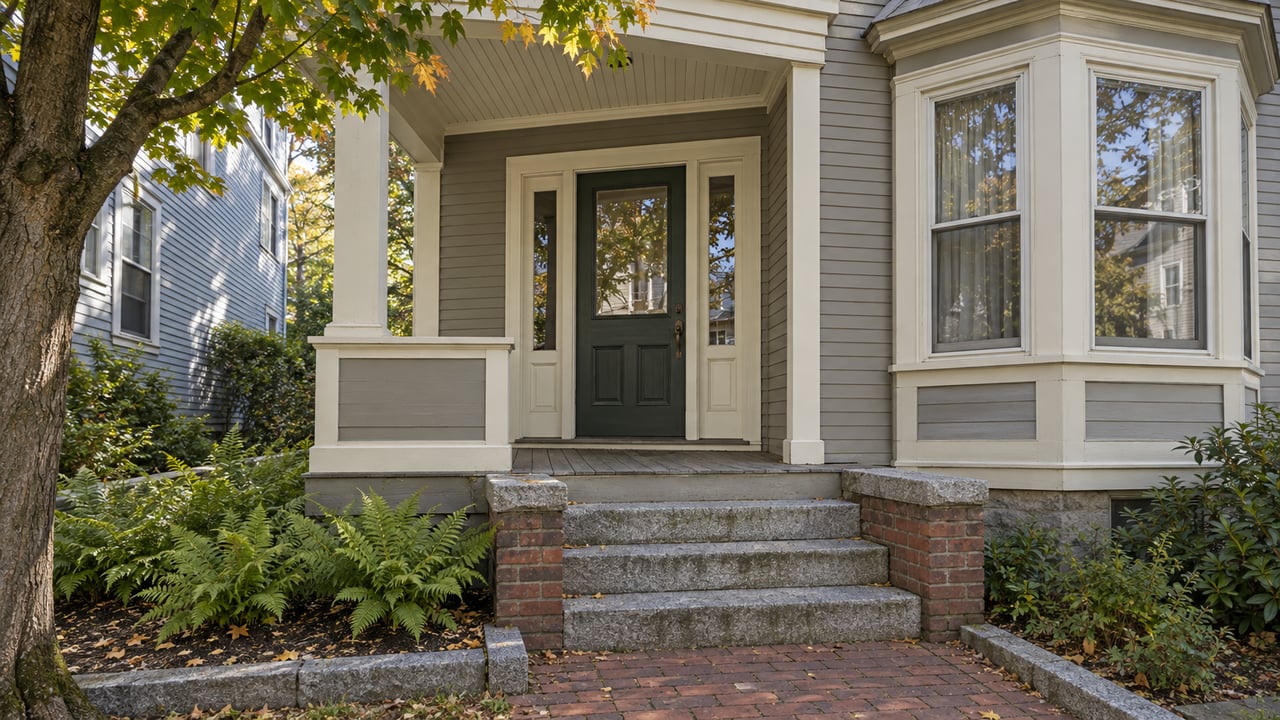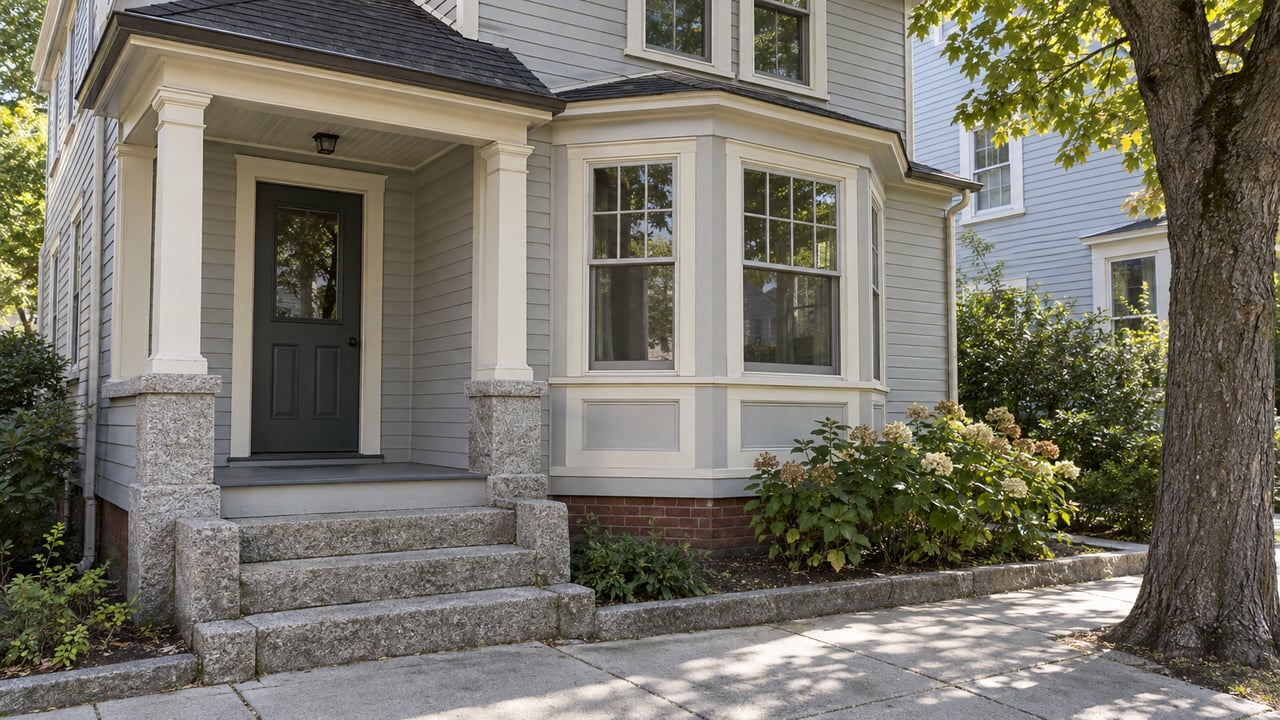
Buyers touring a Victorian on Sumner Hill or a triple-decker near Forest Hills usually brace for one moment: the inspector's flashlight in the attic, the words "knob-and-tube" in the report. That part rarely derails a deal. Fannie Mae, Freddie Mac, and FHA all permit knob-and-tube wiring in a mortgaged home as long as it's functional, safe, and rated at a minimum of 60 amps. The buyer reads that, exhales, and moves on to the next line item.
The insurance question may arise later, after the purchase and sale is signed, when the lender asks for proof of homeowners insurance. At that point, buyers may find that insurance and mortgage underwriting apply different standards to the same wiring.
Inspection and Insurance Use Different Standards
Standard admitted carriers, the names most buyers already have on their phone from a car policy or a previous house, generally won't write a homeowners policy on a property with active knob-and-tube wiring. This isn't a Jamaica Plain quirk. It's how the insurance industry has priced this category of risk for years: the wiring has no ground, its rubber insulation degrades with age, and it's commonly found buried under insulation that was added decades after the wiring went in, which traps heat the original design assumed would dissipate into open air.
So the buyer who cleared underwriting on the loan can still show up to closing without a way to satisfy the lender's insurance requirement. That's a different kind of delay than a failed inspection. The insurance question is separate from buyer-seller negotiations and depends on the insurer's underwriting criteria.
What Actually Happens to the Timeline
Once a standard carrier declines, buyers have two realistic paths, and both involve deadlines.
| Path | Cost versus standard market | Deductible | Rewire deadline |
|---|---|---|---|
| Surplus lines / excess and surplus carrier | Roughly 2 to 3 times standard premiums | Typically $2,500 to $5,000 or more | Usually 90 days to 12 months from binding |
| Massachusetts's FAIR Plan (the MPIUA) | Roughly 30 to 60 percent above standard market rates | Varies by policy | Functions as interim coverage while a rewire is arranged, then the homeowner moves to standard coverage once it's documented |
A surplus lines carrier will bind coverage immediately, which is what gets a deal to the closing table on schedule, but it does so as a contractual bet: the homeowner has a fixed window to complete a documented rewire, and the policy can lapse or go to non-renewal if that documentation doesn't show up on time. The paperwork carriers want at the end of that window is specific: a certificate of completion from a licensed electrician, a copy of the electrical permit, and the final inspection sign-off from the building department.
Massachusetts's FAIR Plan, run through the MPIUA, works differently and exists for buyers who can't line up a surplus lines binder in time. It's not cheap relative to the standard market, but it satisfies a lender's requirement while the homeowner schedules the actual electrical work, and the homeowner can move to standard coverage once the rewire is complete and documented.
Either way, the sequence a lot of buyers expect—inspection, then financing, then closing—also includes insurance underwriting, with its own paperwork and deadline.
Why This Lands Hardest in Sumner Hill and the Triple-Decker Corridors
Jamaica Plain's housing stock makes this more than a theoretical risk for a specific set of buyers. The neighborhood's most distinctive addresses, the Queen Anne and Stick Style Victorians on the hill above Centre Street, and the long runs of classic triple-deckers near Hyde Square, Jackson Square, and Forest Hills, close to the Stony Brook and Forest Hills Orange Line stops, were built during exactly the decades when knob-and-tube was the standard method: roughly the 1880s through the 1930s. Plenty of these buildings have been rewired over the years. Plenty haven't, especially in units that have kept their original systems alongside cosmetic updates like refinished floors or a renovated kitchen.
For an owner-occupant buying a triple-decker to live in one unit and rent the other two, a financing hiccup over wiring is stressful but survivable with the right advance notice. For an investor, the math is sharper. Jamaica Plain triple-deckers have been trading between $1.6 million and $2 million in 2026, and an insurance gap discovered during a 30-day due diligence window can affect a deal of that size. If the wiring hasn't been assessed before the offer goes in, the rewire deadline attached to a surplus lines binder becomes one more line item competing with renovation budget and closing costs.
What This Means If You're Under Agreement Right Now
If you're mid-transaction on an older Jamaica Plain home, the inspection report is not the last word on wiring. Call your insurance agent during the option period, not after it closes, and ask a direct question: is the knob-and-tube in this house still active, meaning it's carrying current, or has it already been abandoned in place in favor of newer circuits? Those are two different underwriting conversations.
If it's active, get a licensed electrician's written assessment of scope and condition before you need a binder, not after. If you'll need a surplus lines policy to close on time, start lining up a rewire contractor early enough to meet the binder's deadline. The key is to identify the separate insurance process early enough to plan for it, rather than waiting until a week before closing.
What This Means If You're Listing an Older Jamaica Plain Home
Sellers of pre-1940s stock have a chance to remove this friction before it ever reaches a buyer's lender. A pre-listing electrical assessment does two things: it tells you honestly whether a full or partial rewire makes sense before you set a price, and it gives you documentation to hand a buyer's insurance agent the moment they ask. A seller who can produce a licensed electrician's letter and any prior permit history on the spot is solving a buyer's future insurance problem before it becomes one, which is exactly the kind of groundwork that keeps a well-priced Jamaica Plain listing moving instead of stalling before closing over something an inspector already flagged weeks earlier.
A Few Straight Answers
Does every Jamaica Plain triple-decker have knob-and-tube wiring? No. Many units in Hyde Square, Jackson Square, and the Forest Hills corridor have been fully or partially rewired over the past two decades, particularly where kitchens and baths have been updated. But original wiring is still common in unrenovated units and in Sumner Hill Victorians that have kept their period character.
If Fannie Mae and FHA allow knob-and-tube, why can insurance still affect a deal? Loan underwriting and insurance underwriting run on separate standards. A lender can approve the wiring as functional and safe while a standard insurance carrier still declines to write the policy, because the two are pricing different kinds of risk over different time horizons.
Does a partial rewire solve the insurance problem? It reduces risk, but most carriers still require full removal of knob-and-tube from active service before issuing a standard policy. A partial rewire that leaves some original circuits live usually still routes a buyer toward surplus lines or the state fallback plan rather than the standard market.
What should I ask my insurance agent first? Whether the wiring is active or already abandoned in place, and if active, what specific rewire deadline and documentation their carrier would require to bind a policy before your closing date.
Old wiring in a Jamaica Plain Victorian or triple-decker does not automatically mean a buyer needs to walk away. Insurance underwriting can affect the transaction timeline, so it helps to start that conversation early. If you're weighing an offer on an older JP property, or getting one ready to list, Juan Real Estate Group can walk the wiring, financing, and insurance pieces through together so you can plan the next steps early. Let's connect and book a free valuation or consultation.
This article is general information, not legal, tax or financial advice. Consult a qualified professional about your situation.