If you've spent any time reading about Massachusetts real estate this year, you've heard about the MBTA Communities Act, the 2021 state law forcing cities and towns near transit to legalize multi-family housing. It's been the subject of lawsuits, town meeting fights, and enough news coverage that plenty of buyers now assume it's the reason zoning feels like it's shifting under their feet in neighborhoods like Roslindale.
It isn't. Boston is exempt. The state's own housing agency says so plainly: while the city is served by the MBTA, Boston is exempted from the Zoning Act, including Section 3A, the very provision that requires other communities to rezone near train stations. Whatever zoning changes are coming to Roslindale, they aren't coming from Beacon Hill's transit mandate. They're coming from City Hall, and they're aimed at something much closer to home: what you're allowed to do with the house you already own.
The Reform Nobody's Arguing About on Cable News
While the MBTA Communities Act draws headlines and lawsuits in the suburbs, Boston's Planning Department has been running its own, quieter process called the Neighborhood Housing initiative. It started in 2025 with staff meeting residents in West Roxbury, Hyde Park, and Roslindale, building on momentum from an ADU guidebook the city released in November 2024. The Planning Department originally aimed for an early 2026 release of draft zoning districts. That timeline slipped. The actual draft landed July 26, 2026, with the first public meeting for Roslindale held virtually the very next night and a second, in-person session at the Roslindale branch library on July 30, according to WalkUP Roslindale's tracking of the initiative.
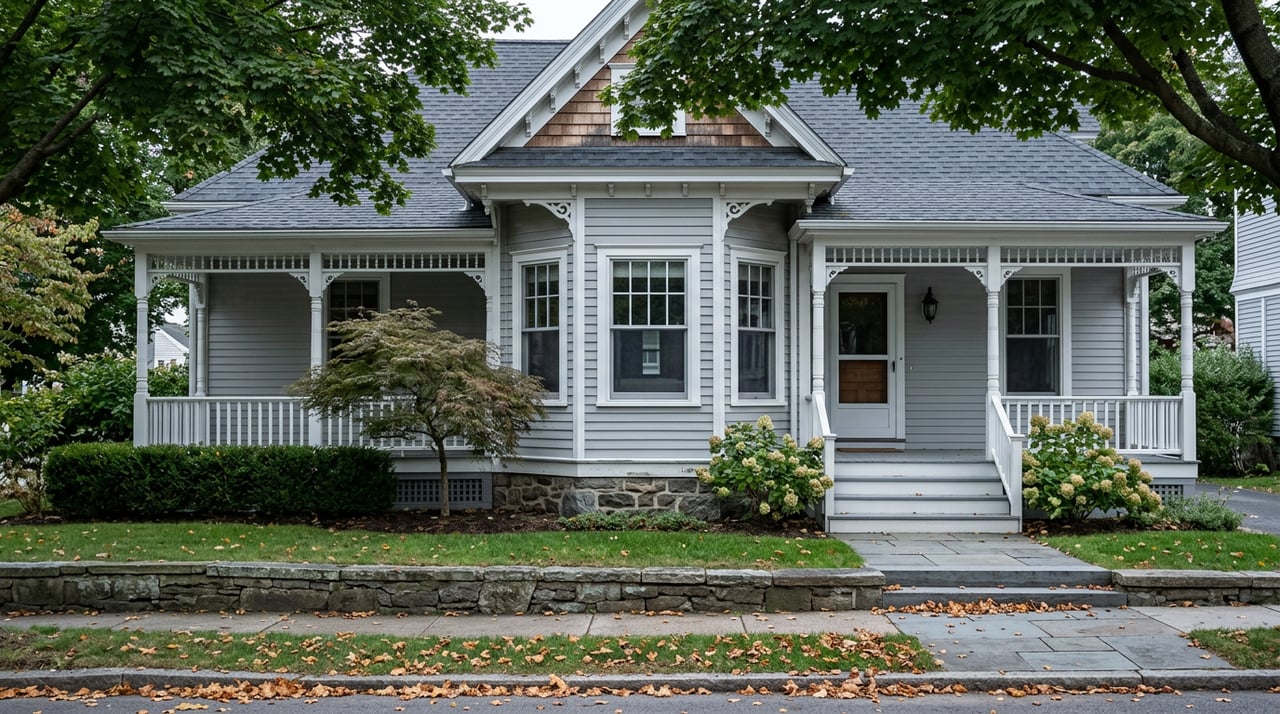
The draft's language is narrow but pointed. It targets what the city calls "reasonable" home updates: porches, porticos, attic expansions, room additions, layout changes, and accessibility ramps, and it explicitly names ADU construction among the project types that would move through a standard building permit instead of a public hearing, per Boston Agent Magazine's coverage of the draft. WalkUP Roslindale, the neighborhood group that has tracked this process for years, describes the practical effect this way: the new zoning would "very largely treat the existing built fabric of our neighborhood as conforming."
That phrase matters more than it sounds like it should.
Why "Conforming" Is the Whole Story
Here's the mechanism most guides to Roslindale skip entirely. Right now, if your triple-decker's dormer, your neighbor's converted attic, or a proposed ADU doesn't match the letter of Boston's decades-old zoning code, the project doesn't get a routine permit. It goes to the Zoning Board of Appeal, a public hearing body that has become, in practice, the gatekeeper for almost anything beyond the most basic repair. A Boston Globe report on a 2022 overhaul of the ZBA's membership quoted WalkUP Roslindale's housing committee chair putting it bluntly: "you basically can't get anything built...without going through the Zoning Board of Appeal."
That's not hyperbole about big development. It applies to a homeowner who wants to finish an attic into a bedroom or add a covered porch. The same Globe reporting noted that nearly every real estate project in the city runs afoul of some part of the zoning code and requires a variance, which is exactly why the ZBA holds so much sway over what actually gets built in neighborhoods like Roslindale.
Here's what changes, on paper, if the draft becomes law:
| Now | Under the Draft | |
|---|---|---|
| Adding a bedroom or dormer | Zoning Board of Appeal hearing required | Standard Inspectional Services permit |
| Building a porch or portico | Zoning Board of Appeal hearing required | Standard Inspectional Services permit |
| Detached ADU | Case-by-case variance, uncertain outcome | Permit-based, if adopted as drafted |
| Accessibility ramp | Often requires variance | Standard permit |
The draft is still in the comment and legislative stage. Nothing here is final, and the city has not published an adoption timeline. But the direction is clear enough that it changes how a buyer should think about a Roslindale property with an unfinished attic or a driveway wide enough for a small structure in back.
What This Actually Means If You're Looking at a Roslindale Fixer
If you're evaluating a two-family or a single-family with obvious upside, renovation potential has always come with an asterisk in Roslindale: the sticker price of the work is one number, but the ZBA is a second, harder-to-price variable. A project can be permit-ready on the contractor's estimate and still sit for months waiting on a hearing date, or get sent back for a redesign because a board member objects to something unrelated to the work itself.
That second variable is what the Neighborhood Housing initiative is trying to shrink. It won't touch construction costs. It won't make lumber or labor cheaper. What it targets is the procedural risk, the part of a renovation budget that's hardest to estimate because it depends on a hearing schedule and a board's mood rather than a contractor's quote. For someone weighing whether to take on a Roslindale property with attic or ADU potential, that's the number that has historically been the hardest to plan around.
This is also worth separating from a different piece of Roslindale zoning news you may have seen: the city already rezoned Roslindale Square itself under a separate program called Squares + Streets, expanding what's allowed in the commercial blocks around Adams Park and Belgrade Avenue, according to the Planning Department's own year-end report. That rezoning is done. The Neighborhood Housing initiative is the separate, residential-street version of the same idea, and it's the one still open for comment as of this writing.
Boston's ADU activity gives an early signal of appetite even before this draft takes effect. The city permitted 51 ADUs in 2025 as of September, compared with 34 for all of 2024. That's growth under the current, more cumbersome process. If the Neighborhood Housing draft removes the ZBA step for ADUs entirely, that number has room to move further, and it's a detail worth watching if you're comparing a Roslindale lot to a similar one in a neighborhood where this reform doesn't apply.
The Market You'd Be Buying Into Right Now
None of this happens in a vacuum, so it's worth being honest about where prices actually sit while the zoning question plays out. In November 2025, the most recent month with published transaction detail, Roslindale's median sale price was $719,000, down 6.8 percent from the prior year, with homes taking a median of 24 days to sell compared to 21 days the year before, and 66 homes changing hands that month versus 76 a year earlier. A broader home value index updated at the end of April 2026 put the average Roslindale home value at $734,109, down 1.4 percent year over year.
Read those numbers together and the story isn't a market in retreat. It's a market where fewer homes are trading, prices have softened modestly, and days on market have barely moved. That's consistent with an inventory-constrained neighborhood rather than a demand problem, which is exactly the environment where unlocking attic space, porch square footage, or an accessory unit without a year-long hearing process becomes a genuinely meaningful lever on value, arguably more meaningful right now than a percentage point or two of price movement in either direction.
A Few Straight Answers
Is this the same law as the MBTA Communities Act I've read about? No. That state law doesn't apply to Boston at all. This is a Boston-only zoning initiative aimed at residential streets in Hyde Park, Roslindale, and West Roxbury.
Has this taken effect yet? Not as of this writing. The draft was released July 26, 2026, and is moving through public comment and the city's legislative process. There's no confirmed adoption date.
I'm under agreement on a Roslindale house that needs a variance right now. Does this help me? Not immediately. Until the draft is adopted, projects that fall outside the existing code still need to go through the Zoning Board of Appeal the way they always have. What this changes is the calculus for projects you're planning to start later, once the new rules, if adopted, are in place.
If you're weighing a Roslindale property for its renovation upside, or you just want a straight read on what a fixer's attic, porch, or backyard is actually worth to build on right now versus a year from now, that's a conversation better had with someone who tracks these zoning drafts as closely as the listings. That's the kind of groundwork Juan Real Estate Group does before a client ever makes an offer. Let's connect and book a free valuation or consultation.