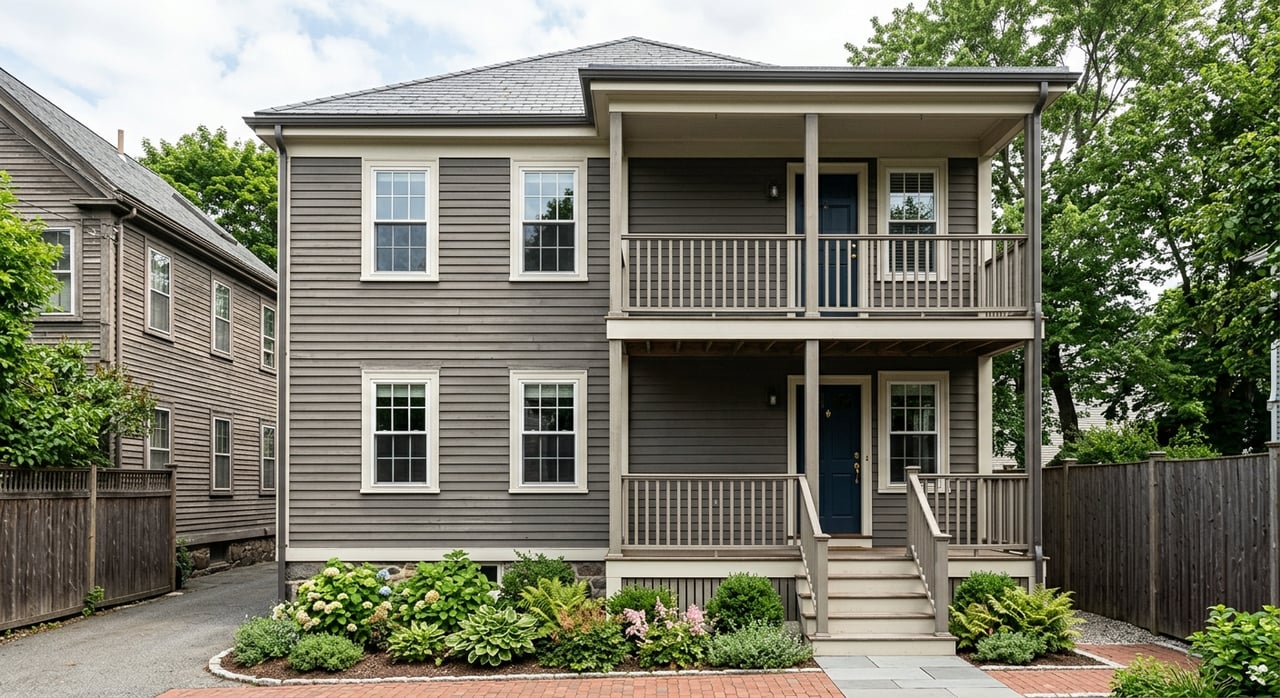
Wondering whether a Jamaica Plain condo or a 2- to 3-unit home is the smarter move? You are not alone. In JP, both options can make sense, but they serve very different goals, budgets, and day-to-day lifestyles. This guide will help you compare price, competition, upkeep, and long-term flexibility so you can choose with more confidence. Let’s dive in.
Why this choice matters in Jamaica Plain
Jamaica Plain has a housing mix that makes this decision especially relevant. It is known for classic triple-deckers, strong access to public transit, and close proximity to places like Jamaica Pond and the Arnold Arboretum. According to Boston Plans, 38% of JP workers who are not working from home commute by public transit.
That local housing stock creates two very different paths for buyers. On one side, you have condos that can offer a simpler ownership experience at a lower entry price. On the other, you have 2- to 3-unit homes that can offer more space, more control, and income potential, but with much more responsibility.
Compare today’s price points
The clearest difference for most buyers is cost. Current Jamaica Plain inventory shows about 55 condos for sale with a median listing price of $775,000. Multi-family inventory is much tighter, with about 17 properties for sale and a median listing price of $1.52 million.
That gap matters because it changes what is realistic for your search. A condo may open the door to Jamaica Plain sooner, while a 2- to 3-unit home usually requires a much larger upfront budget. If you are deciding between the two, your financing comfort zone may answer part of the question right away.
What condos look like right now
Jamaica Plain condos cover a wide range of layouts and price points. Current examples include a 2-bedroom, 1-bath condo around $550,000, a 2-bedroom, 2-bath condo around $789,000, a 3-bedroom, 1-bath condo around $850,000, and a renovated 4-bedroom, 3-bath condo priced at $1.549 million.
Many active condo listings highlight features that make them feel more like whole-home living. You may find private entries, outdoor space, parking, storage, and in-unit laundry. For buyers who want lower maintenance without giving up too many everyday comforts, that is a meaningful advantage.
What multi-family homes look like right now
The 2- to 3-unit homes in JP are typically older two-family and three-family properties with much more total square footage and more bedrooms overall. Current examples include homes with separate entrances and systems, larger kitchens, decks, fenced yards, and multiple unit layouts that support owner occupancy alongside rental use.
Most active multi-family listings are currently above $1.3 million, with examples around $1.70 million and $1.79 million. Some renovated properties also market updated electrical, plumbing, HVAC, and central AC, which can reduce near-term repair surprises. Still, the entry point is clearly higher than the condo market.
Understand competition and timing
Price is only one part of the decision. Market pace matters too, especially if you are trying to plan an offer strategy.
Current data shows Jamaica Plain condos are moving faster and drawing more attention. Condos are averaging about 19 days on market and roughly 5 offers. Multi-family homes are averaging about 24 days on market and about 1 offer.
That suggests the condo market is more competitive right now. If you are shopping for a condo, you may need to move quickly and be prepared for stronger competition. If you are looking at a 2- to 3-unit property, you may have a bit more room for diligence and negotiation, depending on the specific building and its condition.
Choose based on lifestyle
For many buyers, the right choice comes down to how you want to live, not just what you want to own. A condo and a multi-family home can create very different weekly routines.
When a condo makes more sense
A condo usually fits best if you want a more straightforward homeowner experience. Under Massachusetts condominium law, the unit owners’ organization manages common areas and facilities, can obtain insurance for common areas, and can assess and collect common expenses.
In practical terms, that often means fewer building-level tasks for you. You are usually not handling every exterior issue or common-area decision on your own. The tradeoff is shared governance, monthly condo fees, and the possibility of special assessments when the building needs major work.
A condo can be a strong fit if you want:
- A lower price point than a comparable multi-family property
- Less day-to-day building management
- Move-in-ready features like parking, storage, or in-unit laundry
- A simpler ownership structure than managing a full building
When a 2- to 3-unit home makes more sense
A multi-family home usually fits better if you want control, flexibility, or income potential. In Jamaica Plain, many of these properties already have separate entrances and systems, which can support owner occupancy plus rental use.
That setup appeals to buyers thinking about house hacking, multigenerational living, or long-term value-add plans. You get more say over the building, more space overall, and more ways to use the property over time. The tradeoff is that you are taking on a role that is much closer to operating a small rental business.
A 2- to 3-unit home can be a strong fit if you want:
- Rental income potential
- More total living space and more bedrooms
- Greater control over building decisions
- Flexibility for extended household needs or future use changes
- Renovation or value-add upside
Know the maintenance difference
This is where the two options really separate. A condo lets you delegate more. A multi-family asks you to manage more.
For condos, the association typically handles common areas and the master insurance policy for shared building elements. Mass.gov notes that condo associations usually insure common walls and grounds, while unit owners need coverage for what is not included in the master policy.
That does not mean condo ownership is hands-off. You still need to understand the budget, rules, reserve health, and any planned capital projects. But the structure is designed to spread those building responsibilities across the ownership group.
With a 2- to 3-unit home, the obligations are much more direct. Massachusetts sanitary rules make the owner responsible for keeping common areas clean, sanitary, and safe. Boston also requires rental property owners to register the property annually, and the city selects rental properties for inspection once every five years.
Boston’s current fee schedule lists $50 per unit for one- to three-unit buildings and $75 per unit for condo units. Boston housing rules also state that owners must provide light bulbs for common-area lights. In buildings with three units or fewer, common-area lights can be placed on a tenant’s meter.
If you buy a multi-family, you should expect to coordinate repairs, track compliance items, and handle tenant-facing issues if the building is occupied by renters. That extra work can be worth it, but you should go in with your eyes open.
Compare the financial picture beyond price
A lot of buyers assume there is a special tax difference between condos and multi-family homes. In Boston, the bigger financial distinction is usually not a unique condo-versus-multi-family property tax rate. It is the difference in purchase price and operating burden.
Boston’s FY26 residential property tax rate is $12.40 per $1,000 of assessed value, and property tax is billed based on assessed value under the city’s residential and commercial classification system. In plain English, the multi-family option usually costs more to buy and often more to operate because the buildings are larger and the ownership duties are broader.
That means your monthly planning should include more than the mortgage. For a condo, think about condo fees, insurance needs for your unit, and the chance of special assessments. For a multi-family, think about maintenance, registration and inspection requirements, repairs, and the time involved in managing the building.
A simple way to decide
If you feel stuck, use this question: do you want convenience or control?
If you want convenience, a condo is usually the better fit. You can often buy into Jamaica Plain at a lower price point, get useful lifestyle features, and let the association handle much of the shared building operation.
If you want control, a 2- to 3-unit home is usually the better fit. You may gain more space, more flexibility, and income potential, but you will also be responsible for many more decisions and obligations.
Here is a quick side-by-side view:
| Factor | Condo | 2-3 Unit Home |
|---|---|---|
| Typical entry price | Lower | Higher |
| Inventory today | More options | Fewer options |
| Competition today | Higher | Lower |
| Maintenance load | Lower | Higher |
| Control over building | Shared | Greater |
| Income potential | Limited | Stronger |
| Best for | Simpler ownership | Flexibility and rental use |
How to make the right move in JP
In Jamaica Plain, the best choice is rarely just about square footage. It is about your budget, your appetite for responsibility, and how you want your home to function over the next several years.
A condo may be the better move if you want a lower entry point and a more manageable ownership experience in a competitive neighborhood. A 2- to 3-unit home may be the better move if you are comfortable with a larger investment and want space, flexibility, or rental income potential.
This is also where local guidance matters. In JP, small differences in building condition, systems, layout, and renovation history can change the real value of a property fast. If you want help weighing the tradeoffs between a condo and a multi-family home in Jamaica Plain, connect with Juan Murray for a conversation grounded in neighborhood knowledge and practical property insight.
FAQs
What is the price difference between condos and multi-family homes in Jamaica Plain?
- Current inventory shows Jamaica Plain condos at a median listing price of about $775,000, while multi-family homes are around $1.52 million.
Are Jamaica Plain condos more competitive than multi-family homes?
- Yes. Current data shows condos averaging about 19 days on market with around 5 offers, while multi-family homes average about 24 days on market with about 1 offer.
What responsibilities come with owning a Jamaica Plain condo?
- Condo owners usually have fewer building-level responsibilities because the association manages common areas and related expenses, but you still need to budget for condo fees, follow association rules, and plan for possible assessments.
What responsibilities come with owning a Jamaica Plain multi-family home?
- A multi-family owner may need to handle building upkeep, common-area maintenance, rental registration, inspections, repairs, and tenant-facing issues if units are rented.
Is a Jamaica Plain multi-family home better for rental income?
- In many cases, yes. A 2- to 3-unit property can support owner occupancy plus rental income, which is one reason buyers choose this property type.
How should a buyer choose between a Jamaica Plain condo and multi-family home?
- A useful way to decide is convenience versus control. Condos usually suit buyers who want simpler ownership, while multi-family homes usually suit buyers who want more space, more flexibility, and income potential.